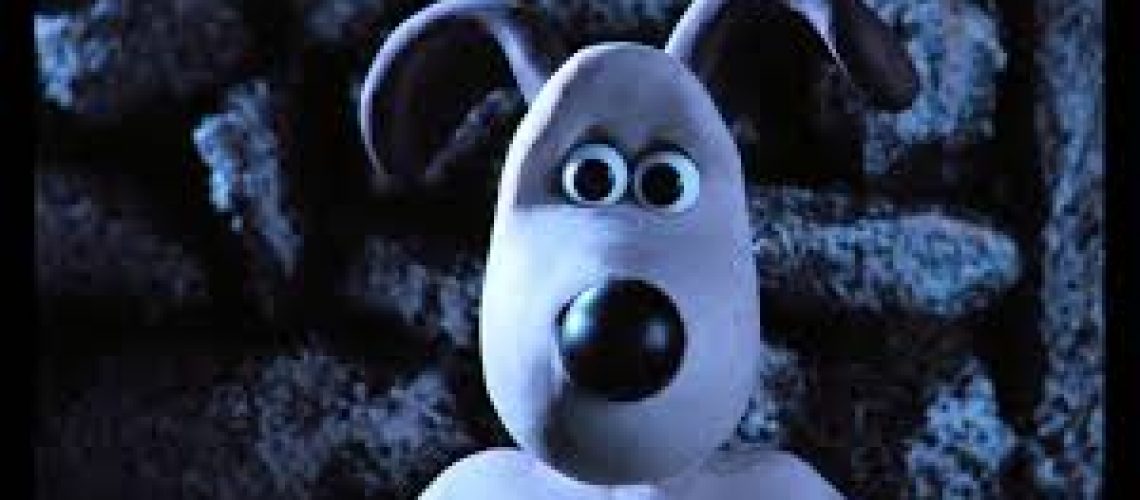
There’s a lovely moment in the Wallace and Gromit short, ‘A Close Shave,’ where Wallace’s faithful hound Gromit is languishing in a jail cell, having been framed for a crime. He’s grimly piecing together a jigsaw puzzle, anonymously donated, and he’s too sad to even look at what he’s doing. Only when the final piece is put in place does he realise that the puzzle spells out – in large, unmissable letters! – details of a plan to bust him out. Gromit’s plasticine look of stunned surprise is fabulous.
Working on a story is the same, to the extent that we have no finished picture to guide us. Mostly, we have to feel our way along. But when we do come to write our conclusion, though it probably won’t come as a shock, as it does for Gromit, it should similarly provide us, and the reader, with a solution to the puzzle, and perhaps a taste of freedom from whatever trap our story has sprung. The key to success or failure lies in the structure that we have created. In this blog I offer what I hope is a worthwhile checklist of three crucial elements in the storytelling process to bear in mind if you are stuck and feel a rethink of your structure is needed. I’m calling them the 3Ks (because we love our alphabet memory aids and we love it when they come in threes).
1) Know Your Protagonist.
This may seem an obvious point to make, but unless you’re working on a series or soap you are following the emotional odyssey of one protagonist, and that protagonist is your hero, (for ‘hero’, read a human on a mission, with or without a cape and mask). That person wants something very badly, and everyone else in the story is in one way or another trying to prevent him or her from getting it. Some writers, and many writing tutors, urge us to create a detailed profile of the hero before putting pen to paper. This may include everything from the person’s fashion sense, what they like to eat for breakfast, where they hang out at the weekends, family background, hobbies, you-name-it. I don’t buy into this. Broad brush strokes are enough to paint the picture. Social status, blue-or-white collar worker, a sense of the location in which he or she lives and moves; these are the important things. All the rest is largely irrelevant. Actors are often quoted as saying that they can’t ‘get into’ the character until they stumble on the right shoes, hat, whatever. Well and good, but though they are related, the two disciplines of writing and acting are quite different, the function of the latter being to interpret the former.
What I mean by ‘knowing your protagonist’ is simply understanding their emotional journey, knowing it so well that you can accurately chart it, moment to moment. Because the audience is invited to identify completely with the hero, there must be a water-tight logic to every impulse that he or she acts upon to reach the intended goal. There are various ways that we writers can wander off the path. A minor character diverts our attention away from the main protagonist. Fascinated by the potential of this hitherto secondary player, we follow his or her thread and soon become lost, unable to find our way back to the story we set out to tell. Worse, we swap our allegiance entirely and start rooting for the bad guy. The whole enterprise devolves to a messy, schizophrenic internal squabble.
Stay on track, know your protagonist. As David Mamet has it: What does the hero want? What happens if he or she doesn’t get it? And … Why now?
2) Know Your Audience.
The steady progression of the hero’s journey or story ‘arc’ enables the gradual illumination of character necessary for an ending that delivers a surprise that in hindsight was inevitable. This is what our audience – and we are members of that audience – has come to the play/novel/movie to experience. One of the profound joys of storytelling is the power we grant ourselves to distract, divert, and entertain an audience of strangers. According to the skill with which we craft our story structure we are in the privileged position of being able to tease, flatter, bluff and cajole them. Far better, however, is to torture the suckers to within an inch of their lives.
I’m not referring to the highly dodgy recent phenomenon of ‘torture porn,’ though the same rule certainly applies. I mean simply: why not wield that power to the max, taking the audience on as breath-taking, or indeed life-threatening a ride as is possible, the better to deliver them safe and well at the end, intact but changed? This may not be easy, may not even be possible, but is certainly something to aim for. And ‘torture’ works at every level. You’re writing a romance? Keep the lovers apart, piling obstacle upon obstacle until the last moment. How can love prevail? It cannot, but it must! You’re writing a comedy? Make your hero suffer every possible indignity, every humiliation, the desired goal receding like a mirage with every forward step. You’re writing a horror? Keep the tension ratcheted up until the last minute.
Know your audience. Your audience has come to have an experience. If at any point in the telling of the story they are holding their breath, your structure is doing its job.
3) Kill Your Darlings.
When we set out, we do so with a prayer and a handful of imagined moments. Not scenes, not even events, just moments. These small, God-given flashes of inspiration are the initial pillars, or foundation stones, of what will become a story. It is not surprising that we love them so much, because they have finally got us off the couch, and because they are all we have, at least for now. As we begin to chart the course of the story, we place them proudly in the narrative, at key points where we feel they will comfortably live. How to navigate from one to another will be a breeze, we tell ourselves, since they are so powerful, funny, inspired etc etc. Then for several days, or perhaps years, we fail to reconcile these moments with each other, stubbornly insisting that they belong in the same story, a story which by this time has taken a different turn, as all stories will, regardless of our original intentions.
Kill your darlings, i.e. don’t be wedded to scenes or lines of dialogue that aren’t working. Cut them. For a test of whether you need to do this, refer to points 1) and 2). It will hurt, but not as much as it would to abandon the project altogether.